
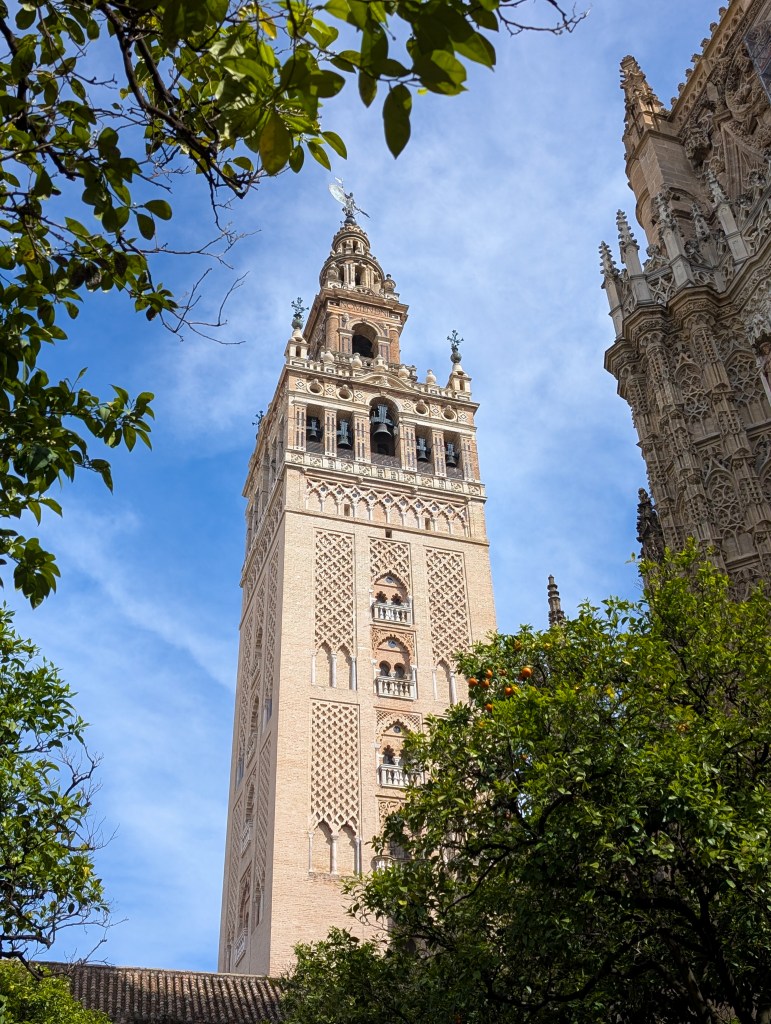
As I’ve mentioned a couple of times on the blog already, I spent the second half of March in southern Spain and the Canary Islands, which is a Spanish archipelago off the northwestern coast of the African continent. The initial purpose of the trip was to visit Tenerife, the largest island, to see where my Puerto Rican grandpa’s family came from—it was his 90th birthday wish. My dad and I were the only ones from my immediate family who decided to go, and we knew we wanted to fly to Europe early to make the most of the long and expensive plane flight. We decided to explore three cities in southern Spain for our portion of the adventure: Sevilla, Granada, and Málaga. Today I’m sharing all the details of the overall trip including our itinerary, info about the language barrier, what I packed, etc. I’ll be sharing a couple of additional blog posts over the coming days with what we did in each destination!


Itinerary
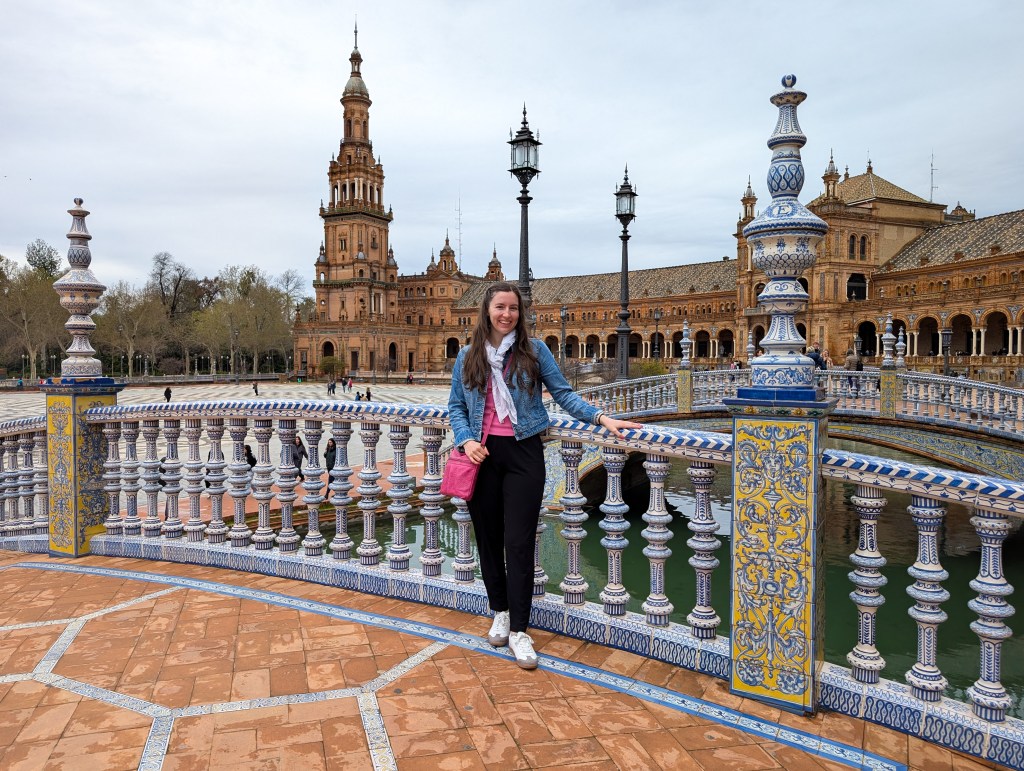
We flew American Airlines from Denver to Madrid, with a layover in Charlotte (would not recommend American Airlines). From Madrid we took a 2.5 hour train ride to Sevilla, where we stayed three nights. So in total two flights, one Uber ride, and a train to get to our first destination—it was a long day!
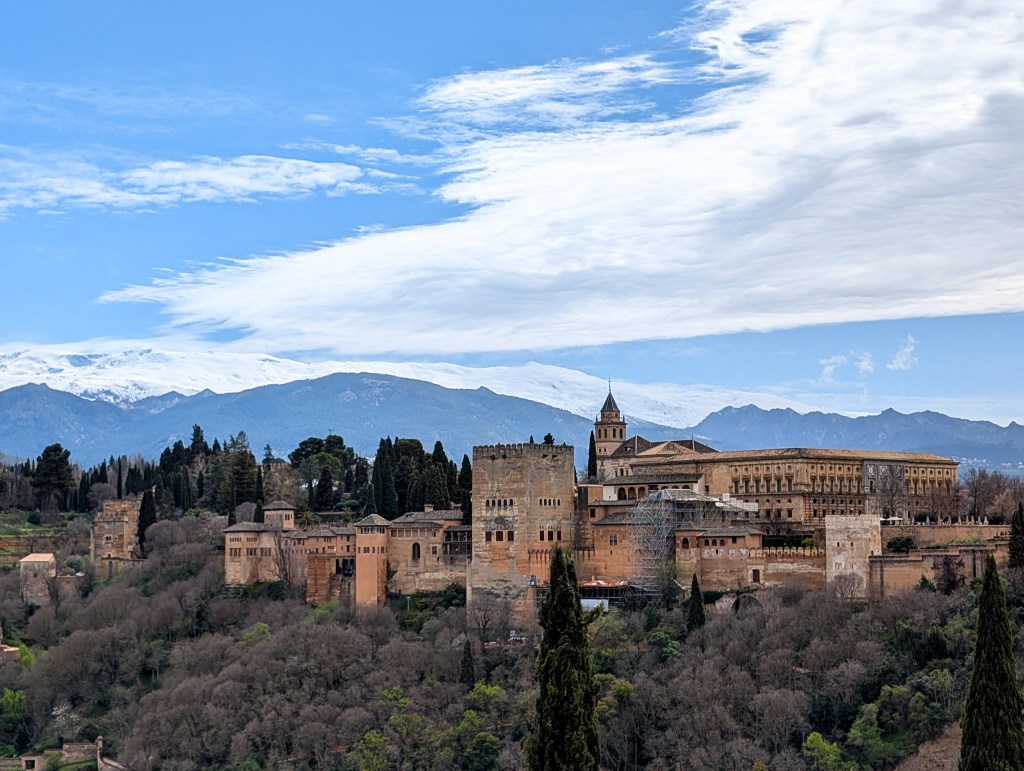
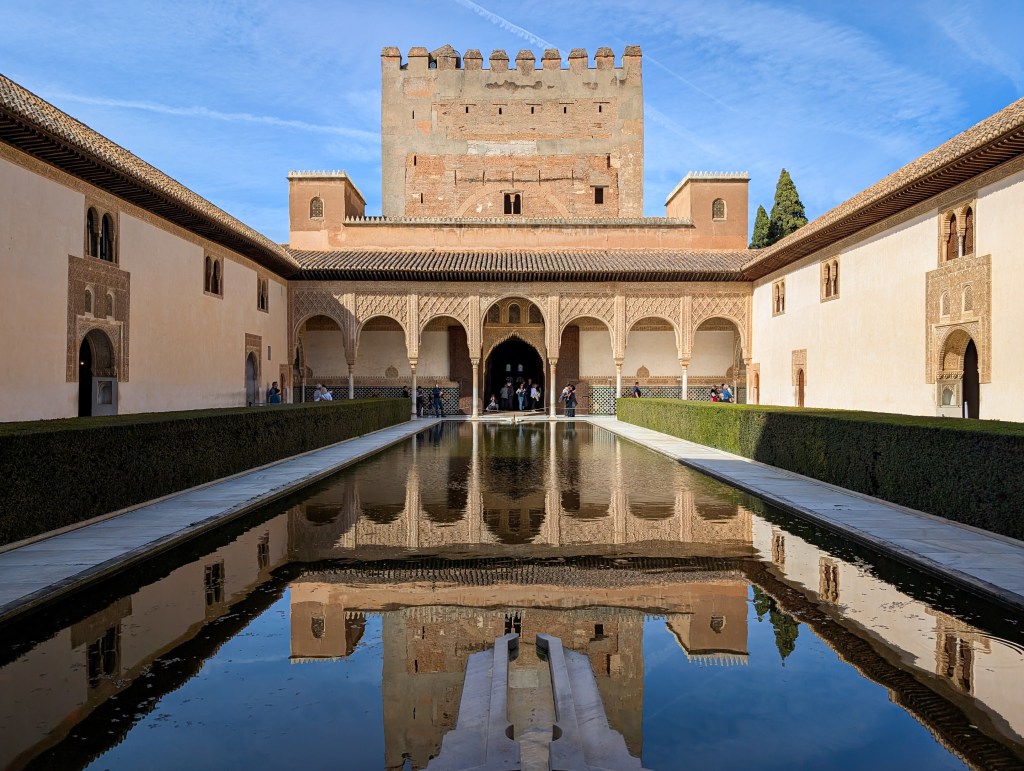
Three days in Sevilla felt like a really good amount of time. We probably could have done a fourth day—if we wanted a slower pace and if we properly enjoyed siesta—but we saw everything we wanted to in three days. From Sevilla we took another 2.75 hour train to Granada, where we stayed just one night. I really wanted to see the Alhambra and we decided staying the night would be easier than trying to do a day trip from Sevilla, though there are tours that do that. I think staying the night was the right call because seeing the Alhambra at night was just as spectacular as in the daytime!
We had the morning to explore other parts of Granada before taking our third and final train (about 2 hours) to Málaga, on the Costa del Sol. We spent three nights there. Unfortunately, we couldn’t fly from Málaga to Tenerife South (there are two major airports on the island), so we had to fly back to Madrid, layover, and then fly 3 hours to the island (we flew Iberia). We stayed in Tenerife four nights before a very long trip home, back through Madrid and then Dallas Fort-Worth.
A Note on Trains
I recommend considering train travel if visiting Spain—I SO wish the U.S. had a good train system. While the Renfe app was terrible (print all your tickets before you go!), my dad and I both agreed that train travel was far less stressful than taking a plane. You do still have to put your bags through very light security, but you don’t have to take shoes off or remove anything from your bags. You can also bring as many liquids as your heart desires. Furthermore, you don’t need to arrive 2 hours early like you would to an airport (though we did still arrive 45 minutes early every time). We found all three trains to be very clean and comfortable. The downside to train travel, which is a big downside, is that they can be affected by worker strikes to the point where trains stop operating. I remember this being a problem when I studied abroad in Scotland as well. Thankfully this wasn’t an issue on our trip, but it is something you need to research to make sure your vacation doesn’t get derailed (pun intended).


Planning Ahead
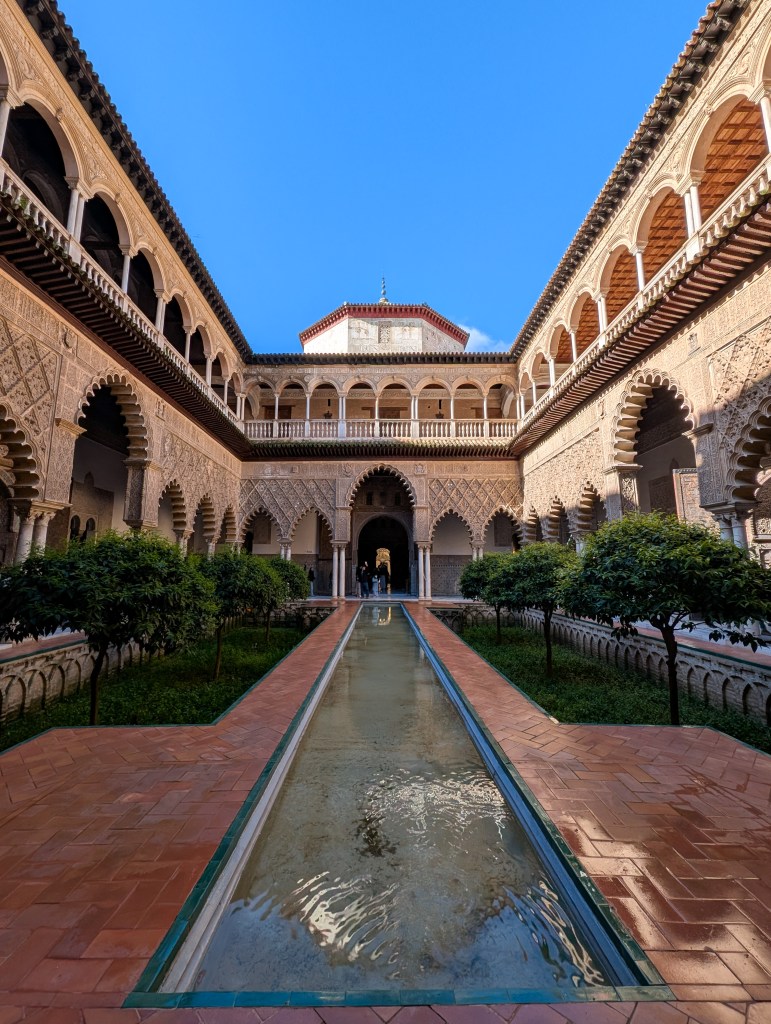
I read while researching these destinations that Sevilla, Granada, and Málaga are all popular tourist destinations that get very busy in the summer. Even in March there were large crowds everywhere we went! Our Alhambra tour guide told us that we were there right before the crowds start to get really insane. The only place where the number of people felt almost suffocating was Málaga on a Saturday, when a cruise ship was docked in port. Otherwise, there were large crowds, and restaurants were always busy, but not to a point where we felt it detracted from our experience.
With all of that said, you have to book tickets for experiences and museums days, weeks, and sometimes even months in advance. If I had to guess I would say at least half of the planned activities we did were already sold-out the day of, and I saw several people get in line only to be disappointed when they learned there were no available timeslots. Booking everything in advance was part of the reason I felt so stressed about this trip because pretty much everything was nonrefundable. Even though Covid has been “done” for several years now, I still feel a little timid about booking travel… and didn’t fully believe this trip was going to happen until a few days before I hopped on the plane. I tried to do the balancing game of waiting as long as I could to purchase without missing out on any activities, but even several weeks before our trip some of the things I had wanted to book were already sold out! So make sure you do your research if you want to visit Andalucia.
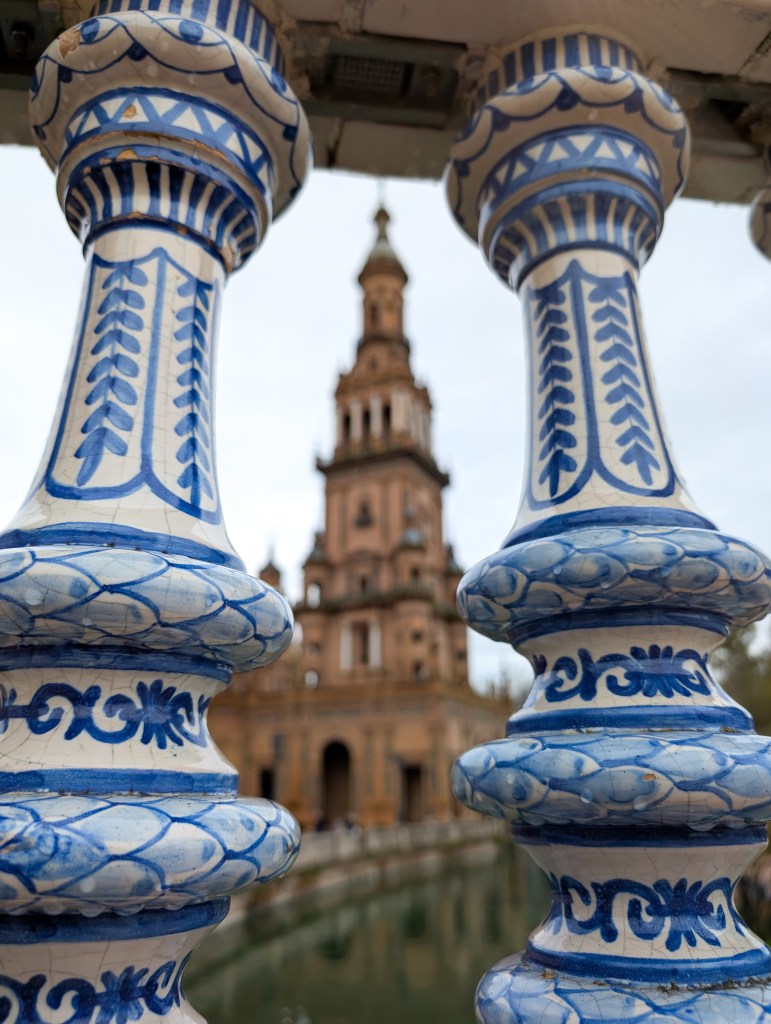

Language Barrier
I’m always so curious about the language barrier when I see other bloggers post about their travels, but I feel like it’s not talked about that often. For me, the language barrier is one of the most stressful parts of traveling internationally, so I always want to know what to expect. I did my best to communicate in Spanish whenever I could during this trip, since I took five years of it in school and have been brushing up on it recently. Some people would respond in Spanish, and others would automatically deem me a tourist and just respond in English. We encountered a couple of people who spoke very little English, but for the most part communication was not an issue, especially at restaurants and museums. We befriended a bartender from Málaga who told us Andalucians have a unique accent, so there were times when words I know in Spanish sounded a little different than how I learned them. He said lightheartedly that sometimes in Spanish movies they’ll add subtitles for Andalucian actors because apparently even other Spaniards can’t understand them, ha!
As for other languages, I saw a lot of tours that could be offered in multiple languages such as German, Italian, and Mandarin. Whenever we purchased or were given an audio guide at historical sites and cathedrals you could also pick from a lot of languages. While Spanish and English were the main forms of communication at restaurants, a lot of the other tourist infrastructure seemed to cater to a variety of nationalities. The signs in both the Málaga and Tenerife South airports were in Spanish, English, and German!


Cost
I was shocked at the price of things, particularly food and drinks, considering all the tourism in these locations. It seemed so cheap! My dad and I could order a couple of large tapas to share and 1-2 drinks each for a total of about 20 euros—you can barely get one entrée for $20 in Denver, let along drinks. It was so nice to be able to “splurge” and eat what we wanted and still feel like we hardly spent any money. Málaga and Tenerife were more akin to U.S. prices, but Sevilla and Granada were quite affordable. Even our rooms at boutique hotels were very reasonable. Our huge suite in Sevilla with a kitchen and private courtyard was less than 200 euros a night.


Food
I might be biased, but the food in Spain was amazing. Of course you have to order jamón ibérico and manchego at least once. The best paella we had was at this spot right along the water in Málaga, and another favorite of mine (which I discovered when I hiked the Camino) is pulpo, or octopus. My dad and I did our best to try as many local specialties as we could—too many to remember—but we especially loved the costillas de cerdo en adobo, which are marinated pork ribs. SO good! I recommend looking up food items and drinks that are specific to each place you visit to help you make better choices when ordering.
I was surprised by how many traditional drinks there are as well. We tried vino de naranja (orange wine), tinto de verano (wine and soda), rebujito (manzanilla sherry and 7Up), and vermouth. The vino de naranja and rebujito were both a little too sweet for my taste. Even though it’s really just a tourist drink, I much prefer the mulled flavor of sangria over the sweet local alternative tinto de verano. My dad and I both loved the vermouth though—and before you get grossed out, the vermouth in Spain is very different than the vermouth you would put in a martini here in the U.S. You drink it straight on the rocks, and it kind of tastes like Coke but without the carbonation. There are even vermouth bars where you can get different kinds on tap! Oh, and you absolutely have to order fresh orange juice—there were orange trees in bloom everywhere we went, which smelled amazing. It was the best orange juice I’ve ever had.
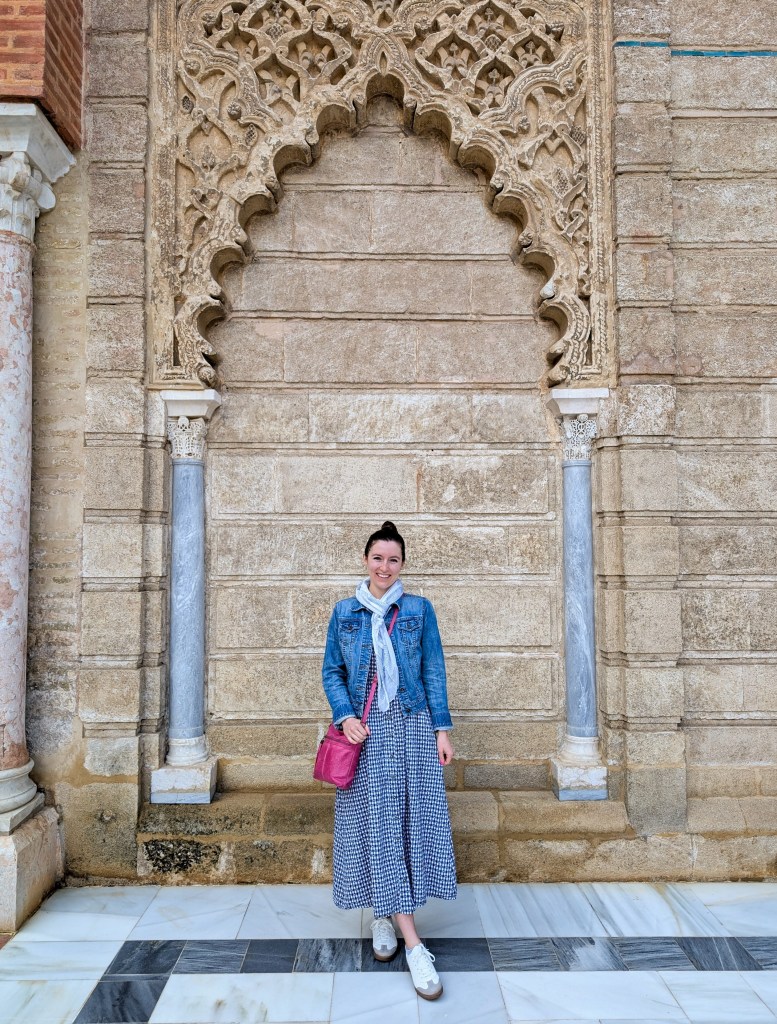

Fashion I Saw
I always like to pay attention to the fashion when I travel and see what the locals are wearing, especially since a lot of Europeans, generally speaking, dress way better than people in the U.S. However, we were in such tourist-packed areas that I hardly saw any locals! I noticed one woman wearing a fabulous dark red leather coat, and as I suspected, tourists were really the only ones I saw wearing jeans. The only other fashion of note was that my dad and I saw a huge group of wedding goers leaving the Málaga Cathedral, and both the men and women were dressed to the nines—silky dresses in jewel tones, intricate head pieces, and six-inch stilettos on the cobblestones. It was like a movie, they all looked so chic and elegant!

What I Packed
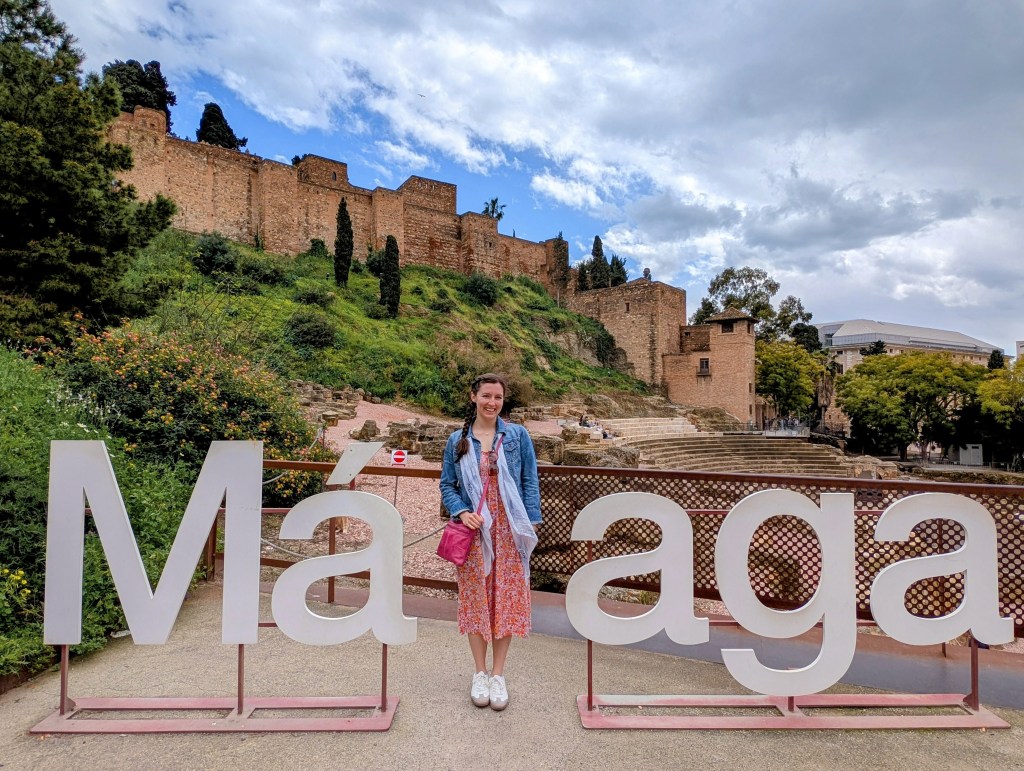
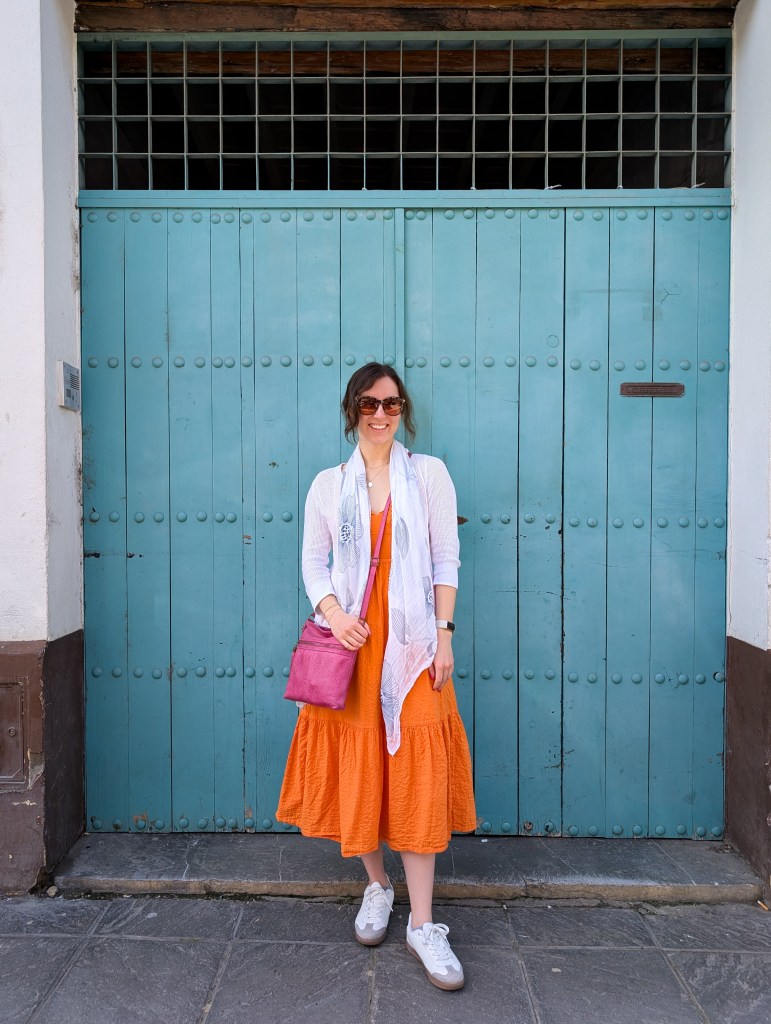
The weather was unusually rainy and cold for most of our trip, with highs in the 60s. I took a gamble and still decided to pack all the sundresses I had already brainstormed, but I threw in several layers like my denim jacket, a white cardigan, and a scarf. Thank goodness I did because the layers and my rain jacket saved me! I got a little chilly in the morning and evenings, but the sundresses and denim jacket worked well during the day when we were out exploring. My only true packing mistake was the shoes—I should have left my sandals at home as it was just too chilly to wear them. Instead, I wore a cute pair of sneakers almost every day of the trip, which was not my intention and resulted in sore feet by the end. Check out the videos below for more details on how and what I packed:
- Pack with Me for Two Weeks in Spain
- Outfits I Packed for Spain
- Unpack with Me—Assessing How Well I Packed

It was a jam-packed two weeks but I wouldn’t have had it any other way. Stay tuned for my upcoming blog posts about what exactly we did in Sevilla, Granada, Málaga, and Tenerife!
Miles of smiles,
Grace


Leave a Reply to Grace G.Cancel reply