
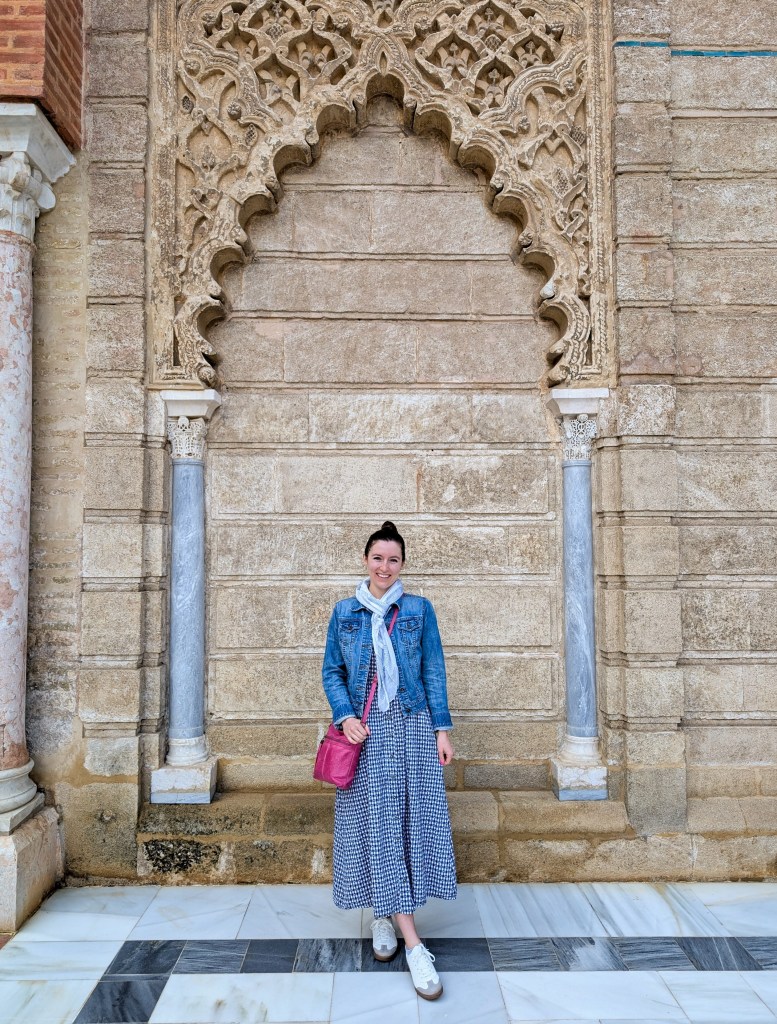
Sevilla was my favorite of the places we visited on our trip. Even with all the tourism, it still had such a quaint, charming feel as we wandered through the narrow streets and alleyways. What I loved about Sevilla, and Analucia more generally, was the mix of architecture and blend of cultures. There is so much interesting history in southern Spain. I learned about the Moors in my Spanish classes and was so excited to see the African and Muslim influence in the cities. It was truly unlike anything I had experienced before, and there were times when I felt like I was in another country entirely!
If you haven’t already, check out my last blog post where I shared my itinerary, information about the language barrier and cost, food we ate, and what I packed:
Two Weeks in Spain: Itinerary and Details


Where We Stayed
We stayed at Suites Machado, a 17th century mansion in the heart of Barrio Santa Cruz. The building had beautiful architecture with hand-painted tiles, vintage furniture, and a rooftop terrace. Our suite came with a kitchen and private courtyard, but since restaurants were so inexpensive we didn’t cook anything ourselves. It was a great value for all the space we had, and the location was right in the heart of the action—it was within walking distance of everything we wanted to see and made it so easy to pop back in if we forgot something or wanted to rest our feet! I would definitely stay there again.
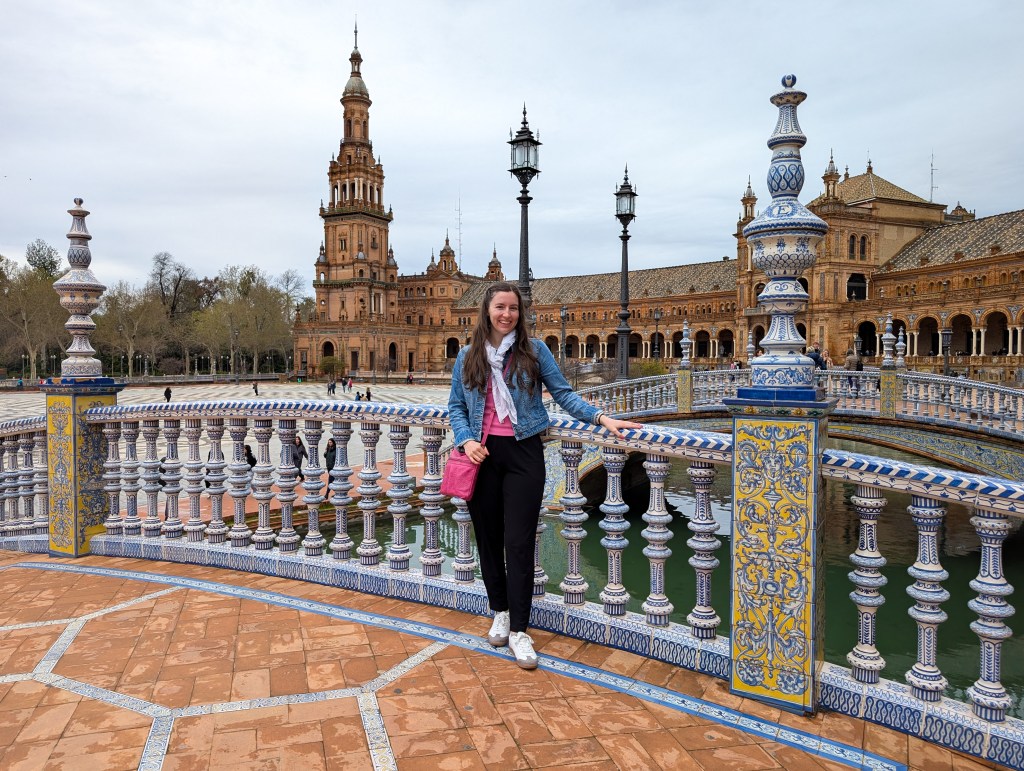
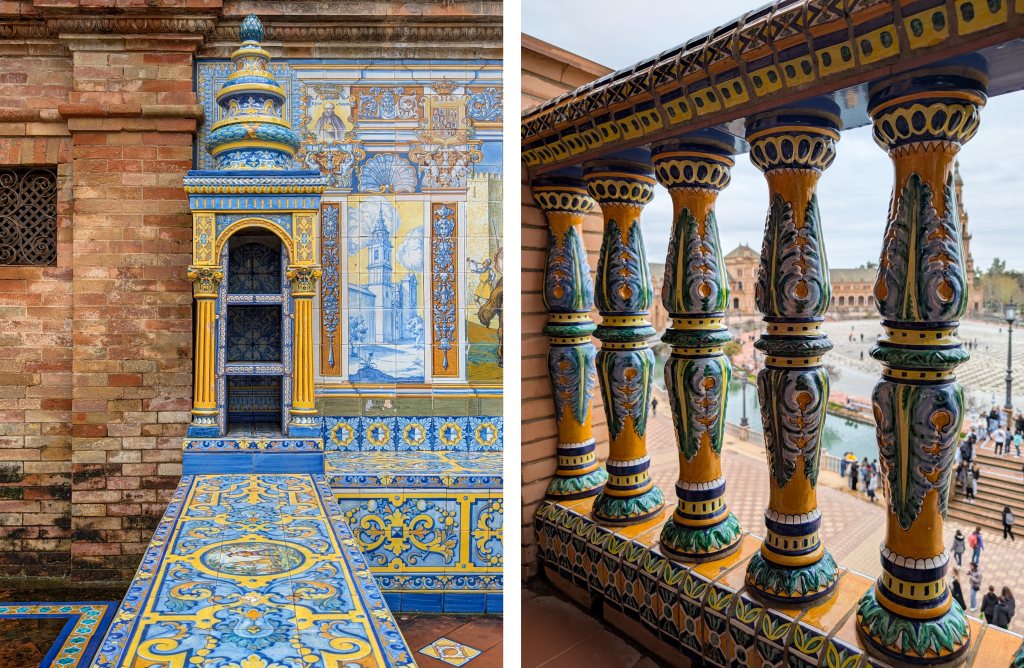
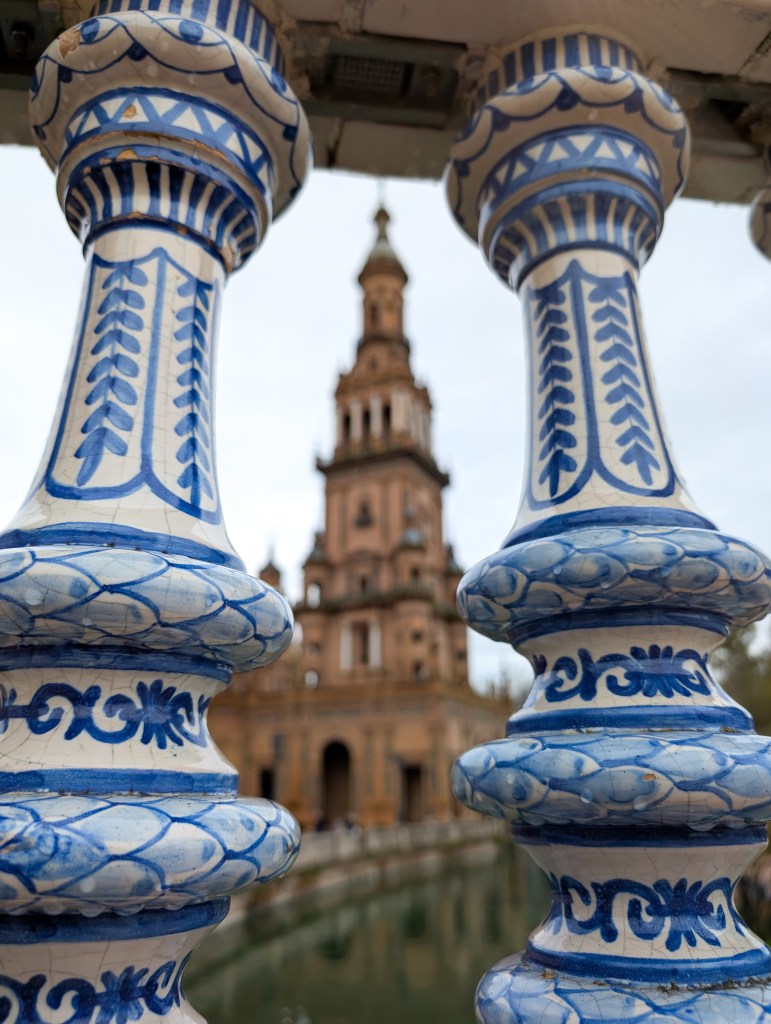

Plaza de España and Maria Luisa Park
We forced our jetlagged booties to explore on our first afternoon and wandered through the Plaza de España, which showcases beautiful tilework, bridges, and water features. Unfortunately, most of Maria Luisa Park was closed due to weather (one local told us the tree branches become at risk of falling when it rains too much), but we still enjoyed seeing the plaza. We spent a little less than an hour there wandering around and taking photos.

Real Alcazar
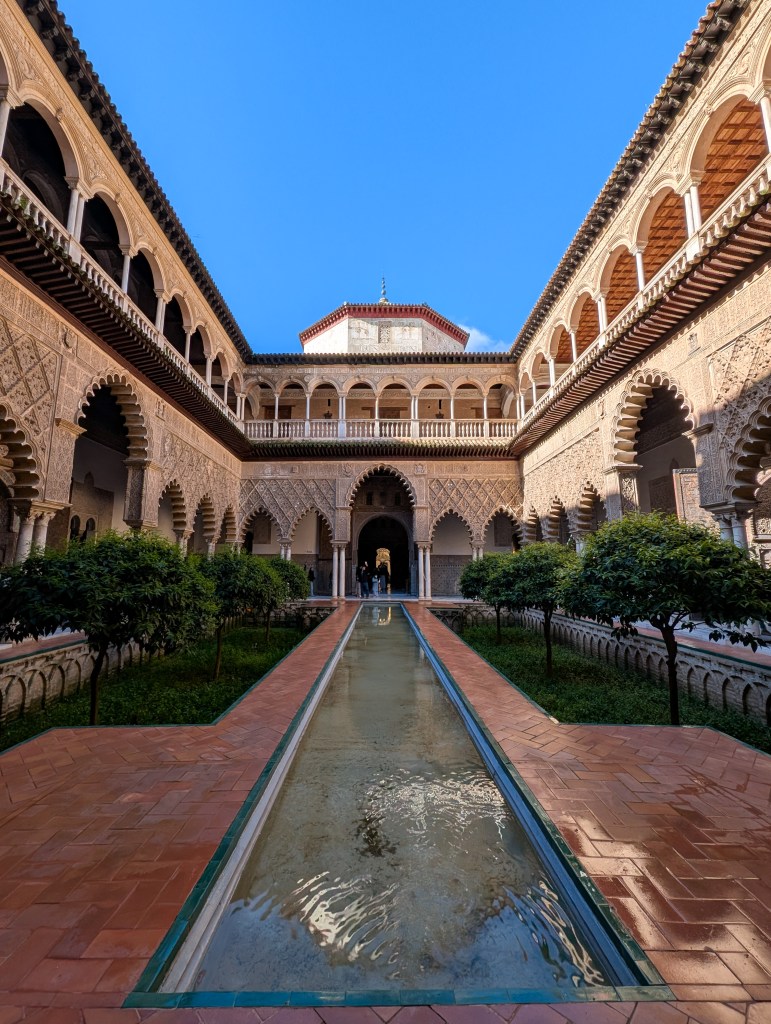
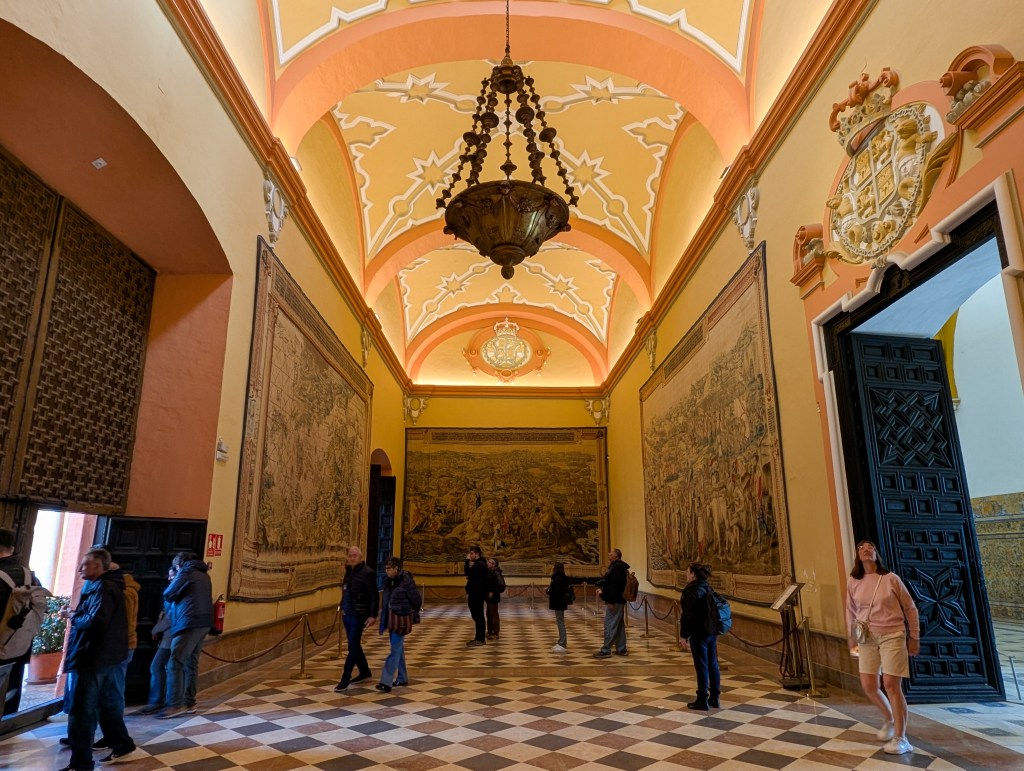
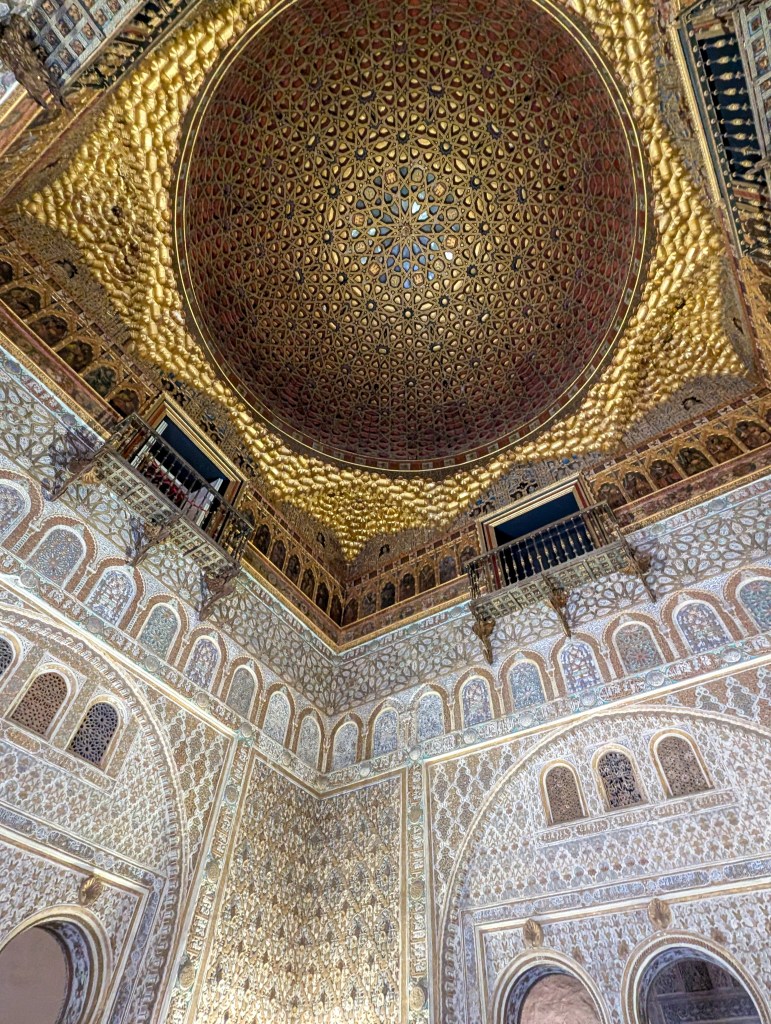
The Real Alcazar is the oldest royal palace in Europe that is still in use! It is full of incredible architecture with extremely detailed facades and intricate tilework. I booked general admission tickets two weeks in advance, but the tickets to the royal bedrooms upstairs in the palace were already sold out. So make sure to book even farther in advance, maybe even a month! While I would have liked to see the bedrooms, the first floor of the palace was still incredible on its own. Your ticket includes a free audio guide on your phone, but you should bring your own headphones as they do not supply any. Unfortunately, the extensive gardens were closed due to weather, like Maria Luisa Park. This was a big disappointment, but we still managed to spend three hours exploring just the palace.


Plaza de Toros de la Real Maestranza de Caballería de Sevilla
We were in Sevilla a little too early for the bullfighting season, but I know a couple of people who have been to a bullfight before or watched one on TV who said it is definitely not for the faint of heart… Still, I was interested in touring the arena and learning more about the tradition. We were able to buy tickets to the Plaza de Toros the day-of and spent about an hour there touring the small museum and sitting in the arena, which was really cool (although they were doing construction to prep for the upcoming season). There was an audio guide here as well, so I recommend always traveling with a pair of headphones! This was my intention for the trip and then of course I forgot them the first day, which was a pain.


Setas de Sevilla
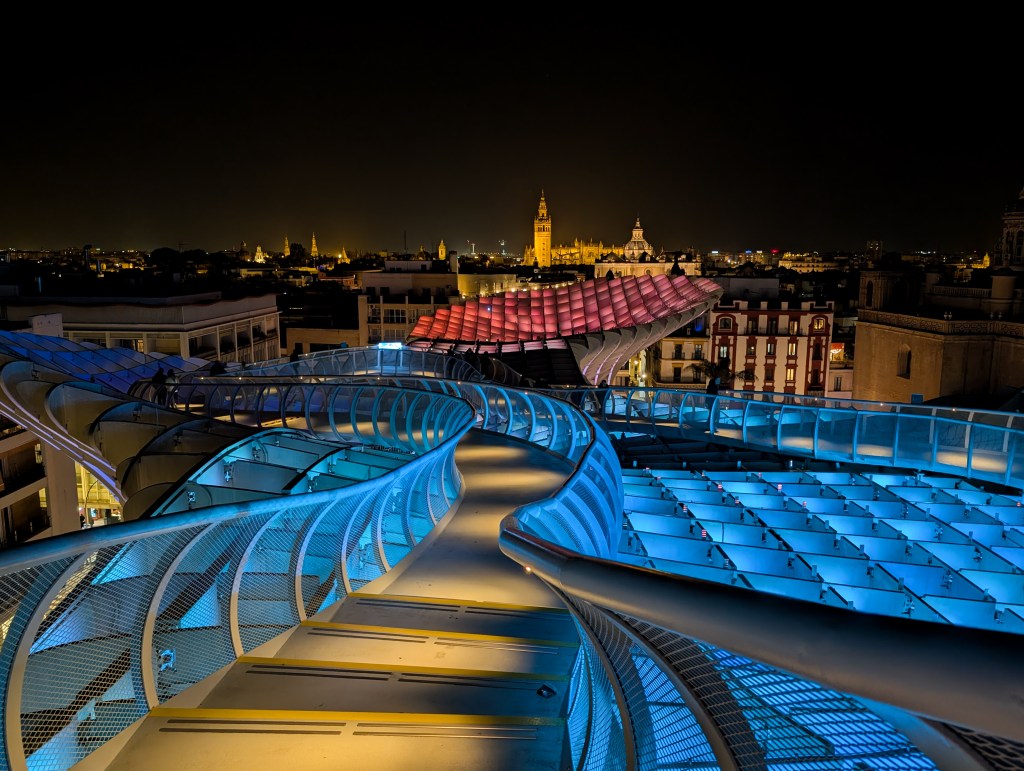
Setas de Sevilla is a large wooden structure (the largest in the world!) that serves as a viewpoint of the city. You can read a little bit about its construction on signs, but otherwise you just wander the path and take in the views! I originally intended for us to visit during the day and watch the sunset, but we ended up going at night instead—which was arguably cooler. The mushroom structures light up and change colors in mesmerizing patterns. We only stayed for about an hour but thought it was a unique way to see the city. We were able to buy our tickets online the day-of, a couple of hours before showing up.

Mercado de Triana
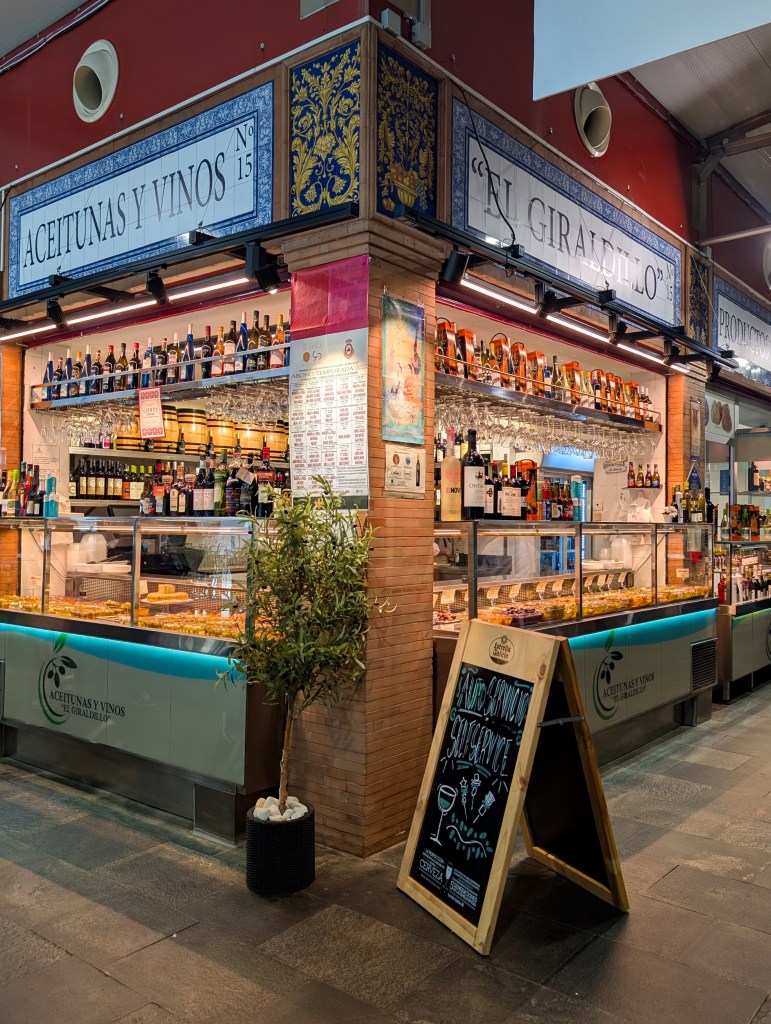
Triana is a neighborhood in Sevilla across the Guadalquivir River and away from a lot of the main tourist sites, so it is a bit less trafficked. We ventured over to eat at the Mercado de Triana, a large indoor food market, and to explore the tilemaking shops of the barrio. The food at the market was delicious, and they had lots of traditional drinks and tapas to try. We went for a late breakfast as it closes in the early afternoon. Afterwards, we explored a handful of tile shops and bought several souvenirs. I would have loved to purchase more dishware for my kitchen but it’s always such a hassle to get breakables home!
Flamenco Show
One of my dad’s and my favorite parts of our trip was seeing a flamenco show. I read a lot of reviews online, as there are tons of places that put on shows, but I ultimately decided to buy tickets from the Museo del Baile Flamenco. Since it was the only flamenco show we saw, I can’t attest to its authenticity—but to us, it was incredible. (Plus, I figured purchasing tickets from the flamenco museum had to be pretty legit.) We arrived about 45 minutes early and scored seats in the front row, since it was first-come first-serve. There was a bar where you could order from a small drink selection while you waited. No photos were allowed, but the dancers and music were absolutely amazing. I booked our tickets directly from the museum’s website two weeks in advance.
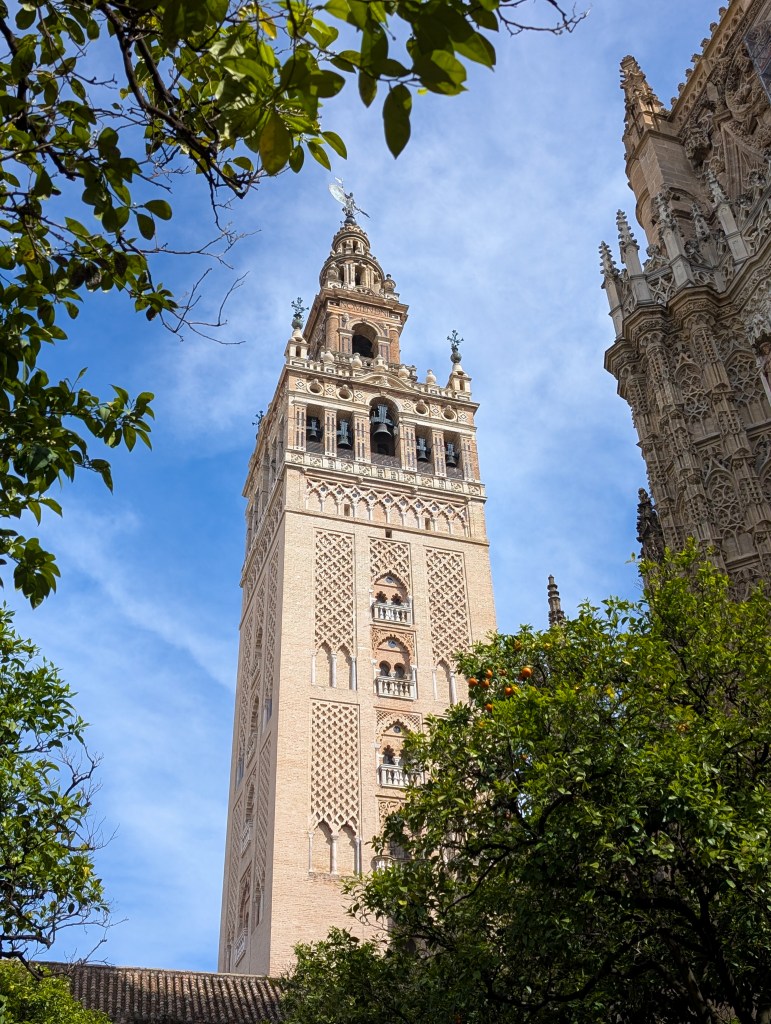


Sevilla Cathedral
The last major tourist attraction we saw was the Sevilla Cathedral. I booked tickets for it two weeks in advance, which included an audio guide (a handheld one, unlike the others which were downloadable to your phone) and access to the top of La Giralda, the bell tower. The cathedral was absolutely stunning. We spent more than three hours there and definitely could have spent more time if we weren’t so tired. This cathedral was unique because it was not built in the shape of a cross, since it was constructed on top of a former mosque—in fact, lots of the Muslim architecture remained. There were several chapels along the exterior of the church, each one with unique symbolism and centuries-old art. One of the main attractions of the cathedral is Christopher Columbus’ tomb (below).


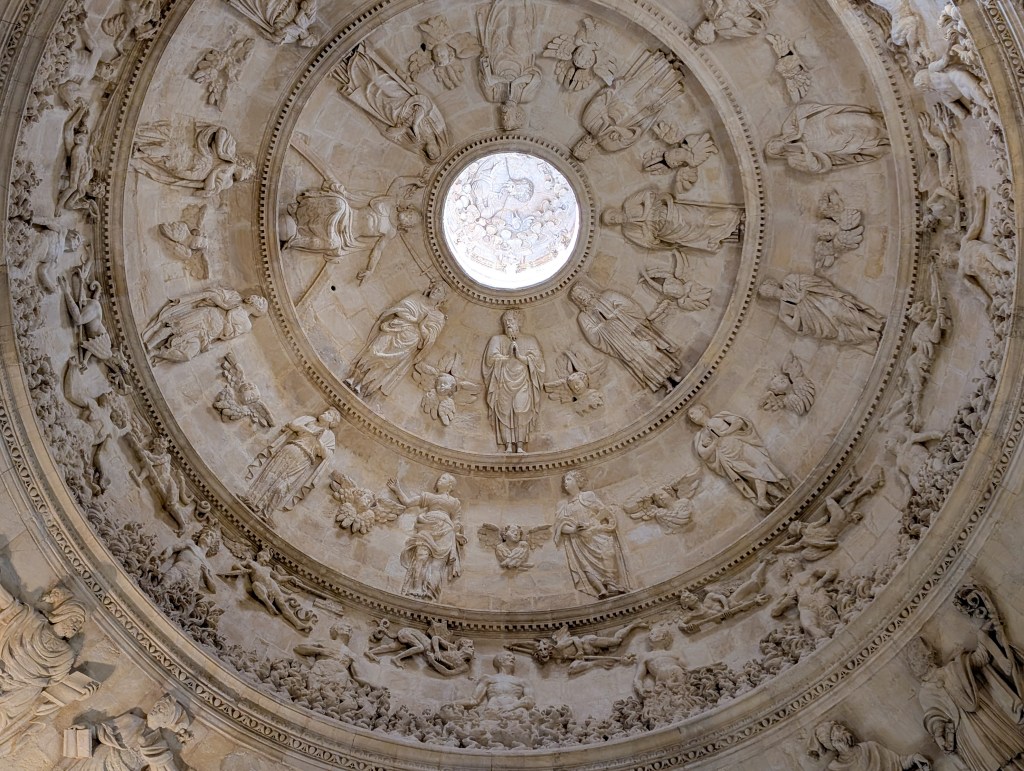
I always love visiting cathedrals and this one was one of the most amazing I’ve seen. It is the largest Gothic cathedral and the third largest cathedral in the world, after St. Peter’s Basilica in Rome and St. Paul’s Cathedral in London. I will say, the order of the audio guide was very confusing, and it was evident that we weren’t the only ones having trouble. It took us about halfway through the cathedral before we realized you could type in the numbers on the signs directly into the audio guide, so you didn’t have to follow the perplexing order. Knowing this would have saved us so much time and frustration!
Fun fact: The dome in the photo above represents the circles of hell described in Dante’s Inferno.
Have you been to Sevilla? My dad and I both agreed that it was a city we could spend time in—as in, rent a flat for a month and live like a local. While it seems like we were really busy with all these activities, I made sure to build in lots of free time so we could explore and get lost on purpose. Aimlessly wandering through all the streets and shops is a must!
As always, thanks for stopping by the blog today, and stay tuned for my posts on Granada and Málaga.
Miles of smiles,
Grace


Leave a Reply